
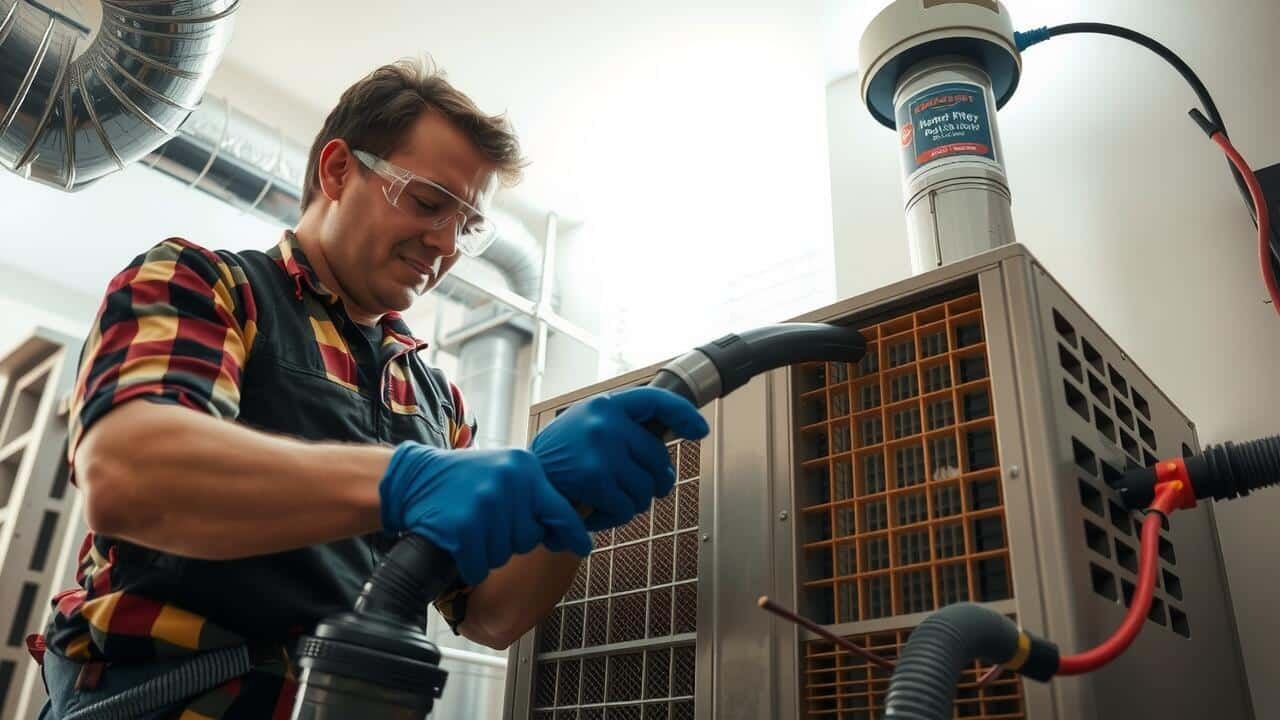
In Northeast Florida, air conditioners run for most of the year. As your system cools your home, it also pulls moisture out of the air. That water collects on the evaporator coil, drips into the drain pan, and leaves the house through the condensate line. Add the dust, pet hair, and debris that every home produces, and the inside of an HVAC system becomes a place where buildup and musty odors can develop. This guide explains how professional HVAC cleaning and antimicrobial treatment work, what you can do between visits, and why humidity control matters so much in Jacksonville and St. Johns.
Why HVAC Systems Need Regular Cleaning in Florida
Regular cleaning keeps your system’s components working the way they were designed to. A clean evaporator coil transfers heat more efficiently. A clean blower wheel moves air with less strain on the motor. A clear drain pan and condensate line help water leave the system instead of backing up into the air handler or onto your ceiling.
When those parts are coated with dust, the opposite happens. Airflow drops, the system runs longer to reach the temperature on your thermostat, and damp dust can hold moisture and cause odors when the system starts.
What Is HVAC Antimicrobial Treatment?
Antimicrobial treatment is a two-part service. First, the key parts of the system are cleaned. Then an EPA-registered antimicrobial product is applied to accessible interior surfaces. The product is used according to its label, which sets out where it may be applied, how much to use, and how long it needs to stay on the surface.
The goal is to help reduce odors and microbial buildup on the treated surfaces. “EPA-registered” means the product is registered with the U.S. Environmental Protection Agency for the uses listed on its label. It does not mean the EPA endorses a particular company or service.
Cleaning always comes first. An antimicrobial product works on surfaces, and it cannot reach a surface through a layer of dust.
What a Professional Service Includes
- Visual check of accessible components: we look at the air handler, coil, drain pan, blower, and accessible ductwork to plan the work and point out issues such as a slow drain line or damaged duct insulation.
- Air duct cleaning: removal of dust and debris from accessible supply and return ducts.
- Evaporator coil and drain pan cleaning: cleaning of accessible coil surfaces and the drain pan to help water drain properly.
- Blower cleaning: cleaning of the blower wheel and housing.
- Antimicrobial application: an EPA-registered antimicrobial product applied to the cleaned, accessible interior surfaces, according to its label.
- Maintenance tips: advice on filters, drain lines, and humidity control for your specific system.
Learn more on our HVAC Antimicrobial Treatment, HVAC Handler Cleaning, and Professional Air Duct Cleaning pages.
Simple Care Between Professional Visits
- Change your air filter every 1–3 months. Homes with pets or recent renovation work may need more frequent changes.
- Keep the condensate line clear. Many systems have a cleanout port on the drain line. Follow your system manufacturer’s instructions or ask your technician to show you.
- Keep supply and return vents clean and unblocked by furniture or rugs.
- Fix water problems quickly. Roof leaks, plumbing leaks, and sweating ducts all add moisture near your HVAC system.
- Schedule yearly maintenance so a technician can check the coil, drain, and blower before the summer season.
Safety first: turn off power at the thermostat and the breaker before opening any HVAC panel. Coil fins are thin and bend easily, and many household cleaners are not made for HVAC equipment. Never mix cleaning products. Bleach combined with ammonia or acids releases toxic gas. If you are unsure, leave the inside of the unit to a professional.
Managing Indoor Humidity
Humidity control is one of the most useful things you can do for your home and your HVAC system. The U.S. EPA recommends keeping indoor relative humidity below 60%, ideally between 30% and 50%.
- Check it with a hygrometer. An inexpensive digital hygrometer shows your indoor humidity at a glance.
- Use exhaust fans in bathrooms and the kitchen while showering and cooking, and for a few minutes after.
- Set the thermostat fan to AUTO, not ON. On AUTO, water on the coil can drip into the drain pan between cycles instead of being blown back into the house.
- Make sure your system is sized correctly. An oversized AC cools quickly and shuts off before it removes much moisture.
- Consider a dehumidifier if your home stays above 60% even with the AC running.
Where UV Lights Fit In
A UV-C light installed near the evaporator coil is another option. It is designed to help reduce microbial buildup on the coil and drain pan surfaces it reaches, which can help keep the coil cleaner between service visits. A UV light does not replace cleaning or humidity control. Read more in our article on UV light installation and on our UV Light Installation page.
How Often Should You Schedule HVAC Cleaning?
Every home is different. Pets, recent renovation work, the age of your system, how hard your AC runs, and odors when the system starts all play a part. Many Jacksonville homeowners schedule air duct cleaning every 3 to 5 years and have the air handler checked and cleaned as part of yearly maintenance. We are happy to look at your system and give you an honest recommendation.
Important
We do not provide microbial assessment or remediation services; if you suspect a growth problem, contact a Florida-licensed assessor. Results vary with each home’s conditions, such as humidity, leaks, and maintenance. Our services are cleaning and surface treatments for HVAC equipment. They are not medical treatments, and we make no health claims.
Schedule HVAC Cleaning in Jacksonville and St. Johns
E.R HVAC provides air duct cleaning, HVAC handler cleaning, antimicrobial treatment, and UV light installation in Jacksonville, St. Johns, and nearby areas of Florida. Call +1 904-536-5944 or fill out our contact form for a free quote.